
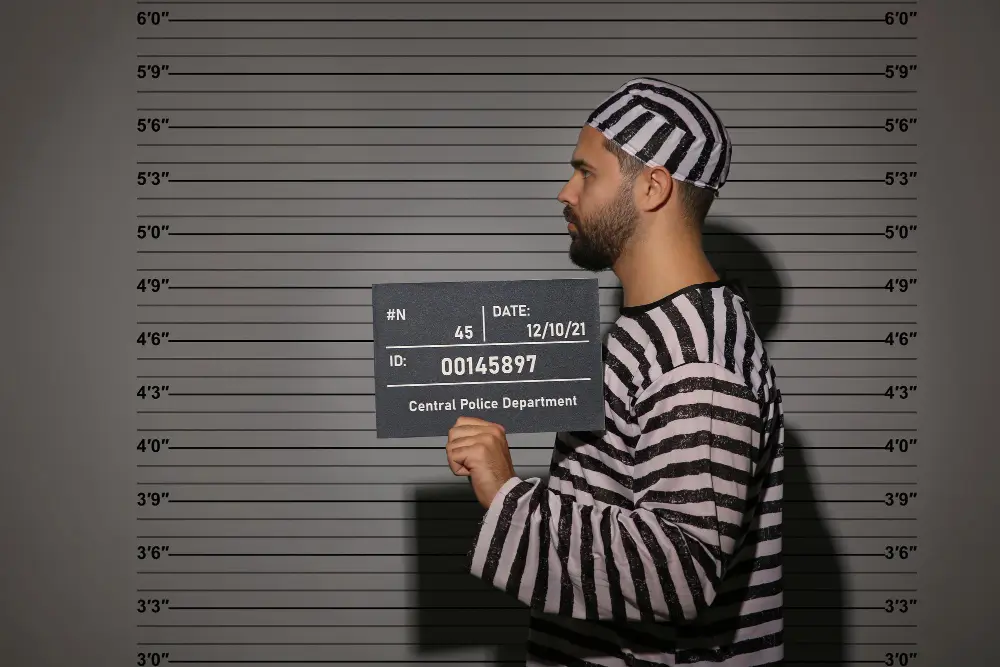
A booking photo can appear on the first page of Google within hours of an arrest — and it can stay there long after the case is dropped, dismissed, or expunged. There are real, legal ways to deal with it. There is also a great deal of nonsense sold around it. This page is the honest version: what works, what doesn’t, and what depends entirely on your specific situation.

Rated 4.9/5 by our clients
offices
no fake guarantees
pathways covered
Assessment
Commercial mugshot websites pull booking photos from public law-enforcement records and republish them, frequently optimized to rank for your name. Historically, many of these operators charged a fee to take the image down — a pay-to-remove model that is now illegal in a growing number of states. Other sites simply ignore takedown requests unless they are legally compelled to act.
What actually works depends on three variables: the state where the arrest occurred, the outcome of your case, and where the image is appearing — a commercial mugshot site, a news outlet, or Google’s image results. No single tactic covers all three. Anyone promising guaranteed removal regardless of those facts is selling something that does not exist.
We start every engagement by mapping those three variables. Only then can we tell you, honestly, which of the paths below apply to you — and which do not.
A number of states have passed laws restricting commercial mugshot websites, and several now require removal on request, with penalties for non-compliance. Where a statute applies to your jurisdiction and case, this is usually the fastest route to an actual removal.
Florida has one of the strongest frameworks. State law prohibits a commercial publisher from soliciting or accepting a fee to remove a booking photo. Once a qualifying written request is received — sent through the required channel with the necessary documentation — the operator has a fixed window to take the image down and is barred from republishing it. The statute also creates civil remedies where an operator refuses to comply.
Texas, Georgia, Oregon and other states have enacted their own restrictions on the release or commercial use of mugshots and on pay-to-remove practices. The specific mechanics — who is covered, what triggers an obligation, how long they have, and what remedies exist — vary significantly from state to state.
Our role here is to confirm the current statute for your jurisdiction, draft a properly documented demand that meets the statutory requirements, send it through the correct channel, and escalate if the operator fails to comply.
Important:
These laws change, and they are state-specific. We confirm the statute that actually applies to your case before acting. We do not cite a law that doesn’t apply to your jurisdiction in order to win the work.
If your record has been expunged or sealed, that legal status becomes a powerful lever. Many commercial publishers will remove an associated mugshot once presented with documentation that the underlying record has been cleared — and in some states they are legally required to. That same documentation strengthens requests to search engines and background-check aggregators to de-index the links pointing at the image. (A cleared record does not, by itself, compel a news outlet or Google to remove an accurate report — that is where suppression comes in.)
If you have not yet pursued expungement and may be eligible, that is often the highest-value first step — it changes what is possible across every other path. We coordinate with your attorney where one is involved. We are a reputation firm, not a law firm, and we do not provide legal representation; we make the cleared-record status work for you online once it exists.
Separately from the source website, Google operates its own removal pathways. These do not erase the page from the web, but removing the result from search is frequently what actually matters to a client — most people will never see the page if it does not surface for their name.
These pathways have eligibility rules and are easy to get wrong. A poorly completed form is simply rejected. We file and track these requests properly and pair them with the source-site work above where both apply.
When the image sits on a legitimate news outlet, a government records portal, or a site outside statutory reach, removal is often not realistic — and suppression is the honest answer. Suppression means building and amplifying high-quality, authoritative content across credible domains so that it outranks the mugshot result for searches of your name across both traditional search and AI-generated results.
This is durable, sustained work measured in months, not an overnight fix. It is frequently combined with the first three paths rather than used in isolation — for example, suppressing a news result while a statute-backed takedown handles the commercial copies of the same image.
The single biggest factor in what we can realistically do is the type of site hosting the booking photo:
| Where it appears | Realistic approach |
|---|---|
| Commercial mugshot site | Statute enforcement (Path 1) where the state regulates pay-to-remove sites; expungement leverage (Path 2) if the record is cleared. |
| Booking photo tied to a cleared record | Expungement / sealing documentation (Path 2) is the strongest lever, plus search de-indexing requests. |
| Google image / search result | Google’s own removal tools (Path 3) for eligible categories; suppression (Path 4) where not eligible. |
| Legitimate news article | Removal is generally not realistic — courts protect accurate reporting. Suppression (Path 4) is the honest path. |
| Government records portal | Hard to remove directly; suppression (Path 4), with de-indexing where the record status changes. |

We map the three variables — state, case outcome, and where the image appears — and tell you honestly which paths apply.
We confirm case status (dismissal, acquittal, expungement, sealing) and gather what each path requires.
Where a law or a Google pathway applies, we draft and file the properly documented requests and track them to a deadline.
Where removal isn’t realistic, we build and amplify authoritative content to outrank the result for your name.
Booking photos get copied across sites. We watch for resurfacing and re-republishing and act when it happens.
★★★★★ Rated 5.0 on Google · 96 reviews