
Coverage across Charleston (peninsula, Mount Pleasant, West Ashley, James Island), Greenville–Spartanburg Upstate, Columbia Midlands, Hilton Head, the Grand Strand (Myrtle Beach), and the South Carolina-relevant Reddit and Tea app surfaces.
South Carolina enacted § 16-15-332 on May 12, 2025 — the last state to criminalize NDII. The statute expressly covers AI-generated and digitally forged intimate images, putting it among the newest and most explicit deepfake-aware NCII frameworks in the country.
Most removals done within 14 days. Not removed within 30 days? Full refund.
Flat-fee engagement covering scan through written confirmation, with 30 days of post-removal monitoring included by default.
South Carolina AWDTSG engagements run as a single workflow covering scan and removal under one flat fee. The South Carolina scan defaults to sweeping the Charleston Lowcountry groups (main plus Mount Pleasant and East of the Cooper), the Greenville–Spartanburg Upstate group, the Columbia Midlands group, the Hilton Head and Grand Strand coastal-resort groups, and the South Carolina-relevant Reddit subs and Tea app content. Takedowns are framed against S.C. Code § 16-15-332 — the new May 2025 statute that, importantly for AWDTSG cases, expressly covers digitally forged intimate images alongside authentic ones.
South Carolina AWDTSG activity splits across the state’s three professional regions — Charleston, Columbia, and Greenville — plus a coastal resort overlay. We handle takedowns across all of them, including:
Because South Carolina’s three professional regions are geographically dispersed and operate semi-independently, a clean South Carolina takedown typically focuses on a single regional group plus its associated spin-offs and Reddit mirrors. Coastal resort cases occasionally span Charleston and the Grand Strand where the same professional is named in multiple regional groups — the workflow surfaces that overlap during the scan phase and adjusts scope before any takedown action.
Our removal process for South Carolina clients is built around the state’s specific group structure, statutes, and professional ecosystems. The 6 steps below are the standard South Carolina workflow. Most removals done within 14 days. Not removed within 30 days? Full refund.
Encrypted video call with our Nashville office team for Charleston, Hilton Head, and Upstate cases; our Chicago HQ for Columbia and Grand Strand cases or where the case touches multiple South Carolina regions. Calls run 30 to 45 minutes and end with a fixed-fee quote and an evidence-collection checklist.
Structured South Carolina sweep: Charleston main group plus Mount Pleasant and West Ashley spin-offs, Greenville–Spartanburg Upstate group, Columbia Midlands group, Hilton Head and Bluffton coastal group, Grand Strand (Myrtle Beach) group, and the South Carolina Reddit subs (r/Charleston, r/Columbia, r/greenville, r/myrtlebeach) plus Tea app content. Most scans complete within 24 hours.
The takedown case is framed around S.C. Code § 16-15-332 — South Carolina’s May 2025 NCII statute. Two features are particularly useful: the statute expressly covers digitally forged intimate images (AI-generated and machine-learning-altered content), and it expressly states that consent to creation does not establish consent to dissemination. Both of those address the most common AWDTSG counter-arguments directly.
Platform submissions go to Meta for the AWDTSG groups, Reddit’s content policy team for the South Carolina subreddits, and the Tea app. Because § 16-15-332 is recent and statute-specific, platform compliance teams respond to citations of it as a clear enforcement signal — particularly the digitally-forged-images language, which is forward-looking compared to older state statutes.
Every removal recorded in writing — surface, date, platform action. South Carolina cases stalled past 96 hours escalate through platform contacts and, on higher-stakes matters, through South Carolina counsel-issued preservation letters citing § 16-15-332.
30-day monitoring window included by default. Sweeps every 7-10 days across every surface the original content touched. South Carolina’s three-region structure means most resurfacing stays in the originating region — Charleston resurfaces in Charleston spin-offs, Upstate stays in Upstate, etc. — so the monitoring window typically catches the full resurfacing cycle.
South Carolina has a meaningful combined statutory framework for removing non-consensual intimate imagery. For South Carolina residents, these statutes often strengthen an AWDTSG takedown case beyond what platform policy alone would support. Note: MGMT Reputation is not a law firm, and nothing on this page is legal advice — but these are the statutes that frequently matter in the cases we handle.

South Carolina’s criminal NCII statute, enacted in May 2025, makes it a misdemeanor on first offense — punishable by a fine of up to $5,000 and up to one year imprisonment — to intentionally disseminate an intimate image or digitally forged intimate image of another person without effective consent, knowing the image was obtained or created under circumstances where the depicted person had a reasonable expectation of privacy. A second or subsequent offense is a felony with up to five years. Notably, the statute expressly covers “digitally forged intimate images” — AI-generated and machine-learning-modified content — making South Carolina’s statute one of the newest and most explicit deepfake-aware NCII frameworks in the country.


The companion definitional statute clarifies that consent to creation of an intimate image does not establish consent to dissemination, and that prior disclosure to one person does not constitute consent for further dissemination — addressing the two most common defenses asserted in AWDTSG cases.

South Carolina’s video voyeurism statute provides additional criminal liability where AWDTSG content includes images captured without the depicted person’s knowledge — for example, hidden-camera content or images taken in private spaces.

South Carolina common law provides remedies for libel and slander where AWDTSG content contains specific, identifiable, provably false statements of fact about a South Carolina resident — particularly allegations of criminal conduct, professional misconduct, or sexually transmitted infection. Defamation per se categories carry meaningful force in South Carolina professional licensing and bar contexts.
In practice, the new § 16-15-332 statute gives South Carolina clients meaningful leverage for the first time. The deepfake provision is particularly forward-looking. We fold the relevant citations into our takedown requests where they apply, which often shortens the removal timeline.
South Carolina AWDTSG cases escalate quickly because the state’s three professional regions concentrate aerospace, automotive, hospitality, and healthcare into tight regional ecosystems. Being named in a group is painful anywhere. In South Carolina, a screenshot can reach a Boeing engineer, a BMW manager, a hospital administrator, or a coastal resort executive through overlapping regional networks in the same week.
Boeing South Carolina (Charleston) builds the 787 Dreamliner with a workforce of several thousand engineers and managers. Senior aerospace staff are subject to continuous reputational diligence, including for security clearance contexts.
BMW's Spartanburg plant is the company's largest globally, Volvo's Charleston-area facility, and Mercedes-Benz Vans (Charleston) anchor the Upstate and Lowcountry manufacturing economies. Senior engineering and management staff are subject to reputational review.
MUSC (Charleston), Prisma Health (Greenville, Columbia), and Roper St. Francis anchor large medical communities. Senior physicians and administrators are subject to continuous credentialing review.
Hilton Head, Kiawah, Charleston, and the Grand Strand support a substantial luxury hospitality industry where senior staff and brand reputation drive bookings and partnerships.
Columbia hosts state government, lobbying, and a concentrated legal community. AWDTSG threads naming senior staff can interact with appointment, confirmation, and bar review processes.
Clemson, the University of South Carolina, MUSC, plus Parris Island, Fort Jackson, and Shaw AFB create academic and military-adjacent professional populations where AWDTSG exposure can interact with Title IX or security clearance review.
South Carolina cases run out of our Nashville office for Charleston, Hilton Head, and the Greenville–Spartanburg Upstate, and our Chicago HQ for Columbia, the Grand Strand, and multi-region matters. All intake is encrypted remote video; no travel required. The South Carolina regions below come up most often in our casework:
Downtown Charleston, the French Quarter, South of Broad, Wagener Terrace, and the historic peninsula.
Mount Pleasant, Isle of Palms, Sullivan’s Island, Daniel Island, and the Cooper River corridor.
West Ashley, James Island, Folly Beach, and the inner Charleston suburbs.
Greenville, Spartanburg, Anderson, Greer, and the Upstate professional belt.
Columbia, Lexington, Irmo, Cayce, and the broader Midlands.
Hilton Head Island, Bluffton, Beaufort, and the southern Lowcountry.
Myrtle Beach, North Myrtle Beach, Pawleys Island, Conway, and the coastal Grand Strand.
Every other region of South Carolina. The entire AWDTSG removal process is handled over secure intake and encrypted video. No travel required.
A confirmed takedown stops the active post. The realistic ongoing exposure is from screenshots captured before our involvement — and in South Carolina, those screenshots typically stay within the originating professional region rather than spreading statewide. Charleston content resurfaces in Charleston spin-offs; Upstate content stays in Upstate; Grand Strand content recirculates within the coastal-resort professional network. The monitoring window is calibrated to catch that regionally-contained resurfacing.
South Carolina’s three-region structure means resurfacing tends to be regional but can spread across all three professional ecosystems when a named individual has cross-regional ties — common for state-government professionals, BigLaw attorneys with multi-office practices, or coastal-resort executives. For South Carolina clients at Boeing, BMW, MUSC, Prisma, or the major regional law firms, even a 24-hour exposure window can reach a senior manager, a hospital credentialing committee, or a state board.
AWDTSG REMOVAL SOUTH CAROLINA
Full end-to-end engagement: consultation, regional scan, legal framing under § 16-15-332, platform submissions, written confirmation, and 30 days of monitoring. The South Carolina scan covers Charleston, the Upstate, Columbia, Hilton Head, the Grand Strand, and the relevant Reddit and Tea-app surfaces as a single flat-fee engagement.
Most removals done within 14 days. Not removed within 30 days? Full refund. Cases that proceed under § 16-15-332 — South Carolina’s new May 2025 statute — often move faster because platforms recognize the statute’s explicit coverage of both authentic and digitally forged intimate images, which gives them a clear pathway when our takedown request cites the statute.
Flat fee quoted at the end of the consultation. South Carolina cases generally fall within our standard pricing band, with the upper end reserved for matters involving digitally forged/AI-generated content (which invokes § 16-15-332’s deepfake provision specifically) or cases spanning multiple regional ecosystems. No retainer, no hourly billing.
Active posts stay down once confirmed. Pre-takedown screenshots can resurface — and South Carolina’s three-region structure means that resurfacing typically stays in the originating region. The 30-day monitoring window catches most of it. Extended monitoring is recommended for clients at Boeing, BMW, MUSC, Prisma, the major Charleston and Columbia law firms, or in coastal hospitality.
Typically no. Meta’s takedown process does not disclose the requesting party. For South Carolina clients pursuing civil remedies under federal VAWA 2022 or under common law invasion-of-privacy and defamation theories with counsel, the requesting party can also remain shielded through structured legal process. All intake and case communications are handled under NDA.
All covered as standard scope. The South Carolina subreddits (r/Charleston, r/Columbia, r/greenville, r/myrtlebeach) and the Tea app are part of the default sweep. AI-generated and digitally forged content is expressly covered — South Carolina’s § 16-15-332 is one of the newest NCII statutes in the country and was drafted with deepfake content directly in mind.
The default South Carolina sweep covers the documented main groups in all three professional regions (Charleston, Greenville, Columbia), the coastal resort groups (Hilton Head, Grand Strand), the regional spin-offs, and the relevant Reddit and Tea-app surfaces. The written scan report is delivered before any takedown action — the client sees the full picture before approving scope.
South Carolina AWDTSG cases concentrate within tight regional professional networks — Boeing’s Charleston aerospace workforce, BMW’s Spartanburg plant, the MUSC and Prisma medical communities, the major Charleston and Columbia law firms, and the coastal hospitality professional class. Exposure compounds quickly inside any of them. Book a confidential consultation directly on our Calendly. The call runs out of our Nashville office or our Chicago HQ depending on which region the case touches, takes 30 to 45 minutes, and ends with a fixed quote or — if there’s nothing actionable — a written confidential report.
★★★★★ Rated 5.0 on Google · 96 reviews
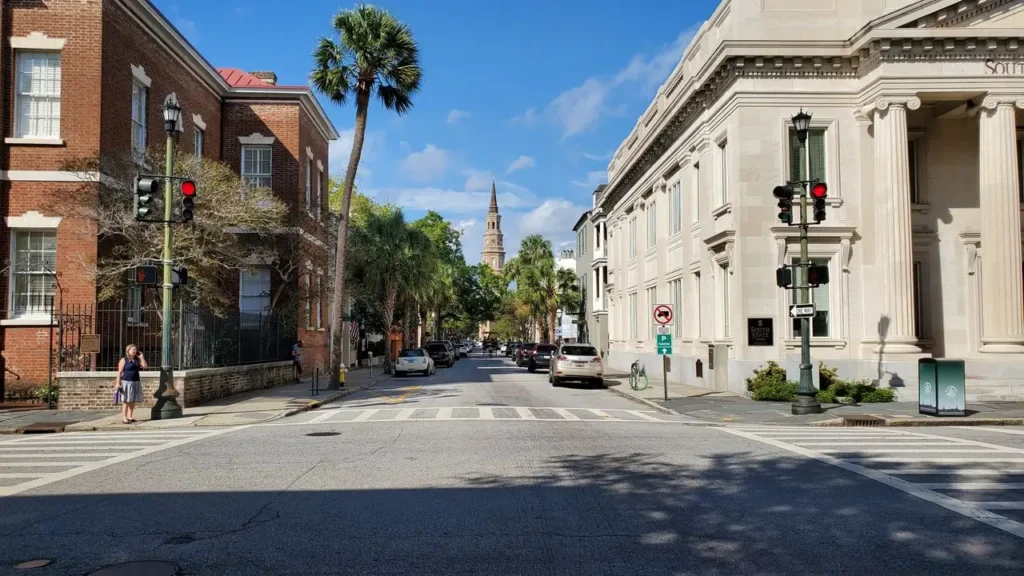
AWDTSG removal South Carolina runs through three distinct metro ecosystems — the Charleston Lowcountry, the Columbia Midlands, and the Greenville–Spartanburg Upstate — each operating its own dense regional group structure with active uncensored spin-offs. Mount Pleasant, Hilton Head, and Myrtle Beach also run their own concentrated coastal-resort and professional groups. South Carolina was the last state in the country to criminalize the nonconsensual dissemination of intimate images, enacting S.C. Code § 16-15-332 in May 2025 — but the new statute expressly covers AI-generated and digitally forged intimate images, putting it ahead of older NCII frameworks in other states on the deepfake question.