Your best candidate just declined the offer. Your second-best candidate ghosted you after the final interview. And your top-performing employee just forwarded you a link to a two-paragraph Glassdoor review calling your company toxic.
One anonymous review on Glassdoor, possibly written by a disgruntled former employee with a personal grievance, is now influencing every hiring decision your business makes and there is almost nothing you can do to stop it being posted. But there is a great deal you can do about it once it is there.
Can you actually remove a Glassdoor review as an employer? Yes in specific circumstances. Glassdoor will remove reviews that genuinely violate their Community Guidelines: fake reviews, defamatory content, reviews containing private confidential information, harassment, and content posted by people who never worked at your company. For everything else honest but harsh criticism removal is not the primary option, but strategic response and suppression absolutely are. This guide covers every route available to employers in 2026, with the exact steps, realistic timelines and what actually works.
| DID YOU KNOW? |
| 86% of job seekers research company reviews and ratings on Glassdoor before applying for a role. Companies with poor Glassdoor profiles receive up to 30% fewer applications and improving a Glassdoor rating by just 0.5 stars produces a 20% increase in job clicks and a 16% rise in application starts. Your Glassdoor profile is not a passive listing. It is an active recruitment asset or liability. |
| Source: Glassdoor for Employers 2025 |
Key Takeaways
- Glassdoor removes reviews only when they violate Community Guidelines, not just because they are negative.
- Professional employer responses can reduce the impact of damaging reviews.
- Increasing positive review volume helps dilute negative ratings.
- Legal action is only useful for clearly false or defamatory reviews.
- Google suppression strategies can push Glassdoor pages lower in search results.
What Glassdoor Will and Will Not Remove The Honest Reality
The single biggest mistake employers make when approaching Glassdoor review removal is trying to flag content that does not qualify for removal under Glassdoor’s published Community Guidelines. Glassdoor’s position is explicitly neutral; they will not remove a review simply because it is negative, harsh or damaging to your reputation. Understanding the exact threshold is critical before taking any action.
| Glassdoor WILL Remove | Glassdoor Will NOT Remove |
| Provably false statements of fact presented as truth | Honest negative opinions about company culture |
| Reviews containing confidential business information or trade secrets | Criticism of management style or leadership decisions |
| Personal attacks on non-C-suite employees named by identity | Negative ratings on work-life balance, compensation or career growth |
| Multiple reviews from the same person or coordinated fake accounts | Vague complaints like ‘toxic culture’ or ‘poor management’ without names |
| Reviews from people who demonstrably never worked at the company | Reviews that are harsh but based on the reviewer’s genuine experience |
| Harassment, hate speech, threats or discriminatory content | Reviews older than one year that are no longer reflective of the company |
Step-by-Step: How to Flag a Glassdoor Review for Removal
If a review meets the violation criteria above, here is the exact flagging process Glassdoor uses in 2026:
- Log into your Glassdoor Employer Account. If you do not yet have one, create a free account at glassdoor.com/employers. An active employer account is required to flag reviews, you cannot report content as an anonymous visitor.
- Navigate to your company profile and open the Reviews section. Scroll through to locate the specific review you intend to flag. Read it carefully before flagging to identify the exact sentence or claim that constitutes the policy violation.
- Click the Flag icon located in the lower right corner of the review. You will be prompted to select a reason for the flag from Glassdoor’s pre-set categories: false information, harassment, confidential data, duplicate account, or general guideline violation.
- Write a clear, evidence-based explanation in the text box. Do not write emotionally or express that the review is unfair, focus only on the specific policy it violates. Include dates, role titles and any supporting documentation you can reference.
- Submit and wait for Glassdoor’s response within 72 business hours. If the review is removed, you will be notified. If the flag is rejected, you have the option to submit additional evidence via Glassdoor’s Help Centre using ‘Flag Inappropriate Reviews’ as the subject line.
- Escalate if the initial flag is rejected. Prepare a detailed follow-up that cites the specific Community Guideline text the review violates, compares the flagged review to similar reviews previously removed from other employer profiles, and attaches documentary evidence disproving specific false claims.
Important: Glassdoor explicitly states it does not recognise evidence submitted by a party with a self-interest in removal as automatically credible. Your flagging explanation must be factual, precise and policy-specific not a character statement about the reviewer.
What to Do When Glassdoor Won’t Remove the Review
The majority of negative Glassdoor reviews will not be removed through flagging alone because the majority reflect genuine employee opinions, however harsh. When removal is not an option, four alternative strategies produce measurable results.
Strategy 1 Respond Publicly and Professionally
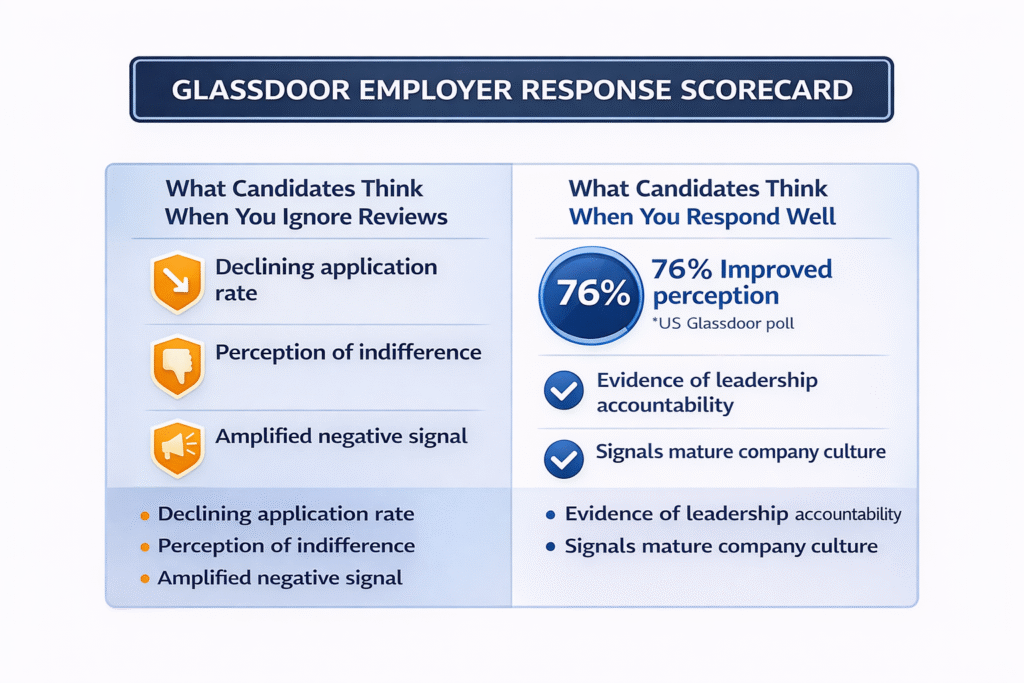
This is consistently the highest-impact action available to employers and the most consistently underused. Glassdoor’s own research confirms that 76% of users say their perception of a company improves when they see an employer respond to a review and 62% of job seekers report an improved opinion after seeing a thoughtful employer response.
- Acknowledge the feedback without confirming or denying specific allegations
- Focus on what the company does and is committed to not what the reviewer got wrong
- Keep it under 150 words brief, professional and forward-looking
- Never identify or hint at the identity of the reviewer this is a critical legal and ethical boundary
- Sign off with a named HR contact or leadership title to demonstrate accountability
Impact: A well-written employer response converts a negative signal into a positive one. Future candidates reading the review also read your response and they judge your company’s leadership by how it handles criticism under pressure.
Strategy 2 Build Your Review Volume to Dilute Negative Ratings
A single 1-star review has an outsized impact when total review volume is low. The same review sitting among 200 balanced reviews barely registers. Proactively building your review base is the fastest legitimate route to improving your overall Glassdoor rating.
- Ask satisfied current employees to share their honest experience at key moments after a promotion, after a successful project, after a positive performance review
- Include Glassdoor in your employee onboarding and exit survey communications as a standard company practice
- Companies that stay active on Glassdoor see 70% higher application rates than those with inactive profiles
- A 0.5-star improvement in Glassdoor rating produces a 20% increase in job clicks the mathematics of volume clearly favour this approach
Important: Never incentivise, coerce or instruct employees on what to write. Glassdoor actively removes reviews where there is evidence of employer-directed content and the reputational fallout from a caught manipulation campaign is significantly worse than the original negative reviews.
Strategy 3 Legal Action for Defamatory or False Reviews
When a review contains provably false statements of fact not opinion, but specific factual claims that can be disproved with documentation legal options exist. However, legal escalation must be calibrated carefully.
- A cease and desist letter sent to the anonymous reviewer via subpoena (Glassdoor does publish their subpoena process) may result in voluntary removal or review amendment
- DMCA takedowns apply if the reviewer has reproduced copyrighted internal documents or emails within the review
- If the review connects to protected employment complaints wages, safety violations, discrimination reporting any legal escalation must be reviewed by employment counsel to avoid creating additional legal exposure
Timeline and cost: Legal routes take months and cost thousands. Reserve them for severe, demonstrably false reviews causing quantifiable harm. The Streisand Effect risk is real legal action against an anonymous employee review that regularly generates press coverage that amplifies the original content.
Strategy 4 Suppress the Glassdoor Page in Google Search Results
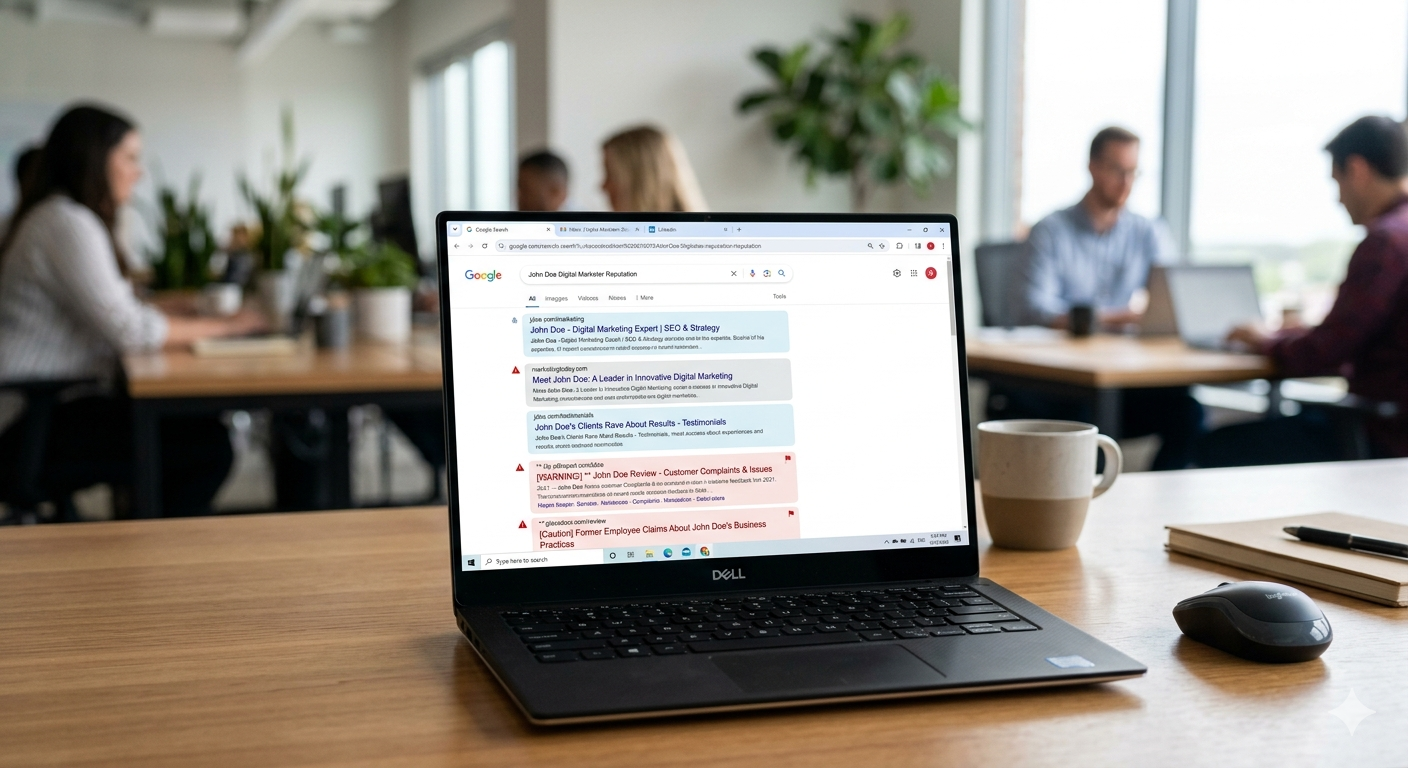
For many employers, the most damaging aspect of a negative Glassdoor profile is not Glassdoor itself, it is that the page ranks prominently in Google when candidates search the company name. Suppressing the Glassdoor result in Google search can be more impactful than any removal attempt.
- Publish and optimise dedicated employer branding content: careers pages, team spotlights, culture videos and employee testimonials that compete with the Glassdoor result for branded search terms
- LinkedIn company page, press releases, news coverage and Wikipedia (where eligible) all rank natively in Google and can displace Glassdoor from top positions
- A well-optimised ‘Life at [Company]’ YouTube video reliably appears in Google search results and competes directly against Glassdoor listings
- Third-party employer award listings Best Places to Work, Inc. 5000, industry-specific rankings generate high-authority inbound links and consistently rank above Glassdoor for company name searches
Timeline: 4–12 weeks for meaningful search result displacement depending on current domain authority and publishing frequency.
| REAL-WORLD CASE STUDY |
| The Tech Company That Turned a 3.1 Glassdoor Rating Into 4.4 in Eight Months |
| A 75-person technology company came to us with a Glassdoor rating of 3.1 stars after a difficult period that included a round of redundancies and a leadership restructure. Seven of the twelve most recent reviews were 1-star ratings, and the company’s Glassdoor page was ranking second in Google for branded searches of their company name. Senior engineering candidates were declining interviews after citing the Glassdoor profile during the recruiting process. |
| We began with a full audit of all 34 existing reviews. Three reviews were successfully flagged and removed for verifiable policy violations: two contained specific false factual claims about salary ranges that could be disproved with public data, and one was identified as posted by a person who had never been employed at the company based on specific operational details that did not match any documented employment period. The remaining 1-star reviews reflected genuine employee frustrations following the redundancies and were not eligible for removal. |
| We then executed a three-part rebuilding strategy: professional employer responses were written for all 12 recent negative reviews; a review generation programme was launched targeting 40 current satisfied employees; and a Google suppression campaign was deployed publishing a new careers page, three LinkedIn employer articles, two press releases and a team culture video. |
| Result: Rating reached 4.4 stars within eight months. Glassdoor dropped from Position 2 to Position 6 in Google for branded searches, displaced by the careers page and press release coverage. Recruiting conversion from first contact to accepted offer improved by 34% in the subsequent quarter. |
| “ |
| Glassdoor is one of the most mismanaged reputation assets in business. Companies either ignore it completely or panic and try to fight every single review, both of which make things dramatically worse. The employers who win on Glassdoor are the ones who respond with professionalism, fix what is actually broken internally, and build a review base that tells the whole story rather than just the loudest voices. Your Glassdoor profile is a leadership test. How you respond to criticism publicly says more about your company than the criticism itself. |
| Founder & CEO, MGMT Reputation |
3 Employer Responses That Make Glassdoor Problems Significantly Worse
- Responding defensively or identifying the reviewer in your public reply. Even implicitly narrowing down who wrote the review ‘our former Head of Sales’ is a severe reputational and potential legal error that destroys exactly the credibility a professional response is designed to build.
Candidates reading your response do not know who the reviewer is. Your job is not to defend against the specific person it is to demonstrate to future employees how your company handles feedback. A defensive response tells them everything they need to know about your culture.
- Filing a lawsuit against the reviewer as a first move. Unless the review contains specifically provable false statements of fact causing severe and quantifiable harm, litigation is extraordinarily expensive, draws press attention and almost always results in additional negative coverage.
The subpoena process to identify an anonymous Glassdoor reviewer is also public information and the act of subpoenaing an employee review regularly becomes a story in its own right. Legal routes should be reserved for the most severe cases and always undertaken with specialist counsel.
- Deleting your Glassdoor employer account to hide the profile. This does not remove your company’s Glassdoor listing, it only removes your ability to respond to reviews, claim your profile, post jobs or monitor new content. You become invisible as a responder while remaining fully visible as a subject.
Deleting your employer account is one of the worst possible moves. It signals abandonment, removes your only management tools and leaves the negative content completely unchallenged.
| Stop Losing Top Candidates to Glassdoor Reviews You Can Control Our free Glassdoor audit identifies which of your reviews qualify for removal, grades your current employer response strategy, and delivers a specific rebuilding plan with projected rating improvements and hiring impact estimates with no commitment required. ✔ Free Glassdoor Profile Audit ✔ Removal Eligibility Assessment ✔ Employer Brand Repair Strategy Request Your Free Glassdoor Audit |
How MGMT Reputation Manages Glassdoor Review Removal and Employer Reputation
Glassdoor management is one of our most frequently requested services from HR directors, recruitment leads and business owners who are watching qualified candidates decline offers because of what they find on Glassdoor. Our employer reputation team has managed hundreds of Glassdoor cases from coordinated fake review attacks to post-redundancy rating collapses and individual defamatory reviews.
Our four-stage employer Glassdoor service delivers:
- Review Audit and Violation Assessment: Every review is individually reviewed against Glassdoor’s current Community Guidelines. Reviews with legitimate grounds for removal are identified and prioritised before any flagging is submitted.
- Strategic Flagging and Removal Execution: We submit documented, policy-specific flag requests with supporting evidence achieving significantly higher removal rates than self-managed employer submissions.
- Employer Response Copywriting: Professional, on-brand responses are drafted for every significant negative review turning your public response record into a recruitment asset rather than a liability.
- Review Volume Programme and Google Suppression: We design and execute a review generation strategy for current employees and a Google suppression campaign that displaces Glassdoor from prominent branded search positions.
We work with businesses of all sizes from 20-person startups managing their first Glassdoor crisis to enterprise HR teams dealing with sustained employer reputation challenges. Our Glassdoor work is fully integrated with our broader employer branding services, meaning every action reinforces your overall talent acquisition strategy.Explore Glassdoor reputation services or request your free audit and have a specialist assess your Glassdoor profile within 24 hours.
FAQs
1. Can employers remove negative Glassdoor reviews?
Employers can request removal only if the review violates Glassdoor Community Guidelines, such as fake content, harassment, confidential information, or reviews from non-employees. Honest negative feedback usually remains.
2. How long does Glassdoor review removal take?
Glassdoor typically reviews flagged content within 72 business hours. If additional evidence is required or escalation is needed, the process can take several days to a few weeks.
3. What should I do if Glassdoor refuses to remove a review?
If removal is denied, employers should respond professionally, increase positive review volume, improve internal issues, and use search result suppression strategies.
4. Do Glassdoor reviews affect hiring decisions?
Yes. Candidates frequently check Glassdoor before applying, and negative reviews can influence whether they apply, accept interviews, or decline job offers.
5. Can I improve my Glassdoor rating without removing reviews?
Yes. Encouraging honest employee feedback, responding to reviews, improving workplace experience, and strengthening employer branding can gradually increase ratings.